In this article
What does a slider do?
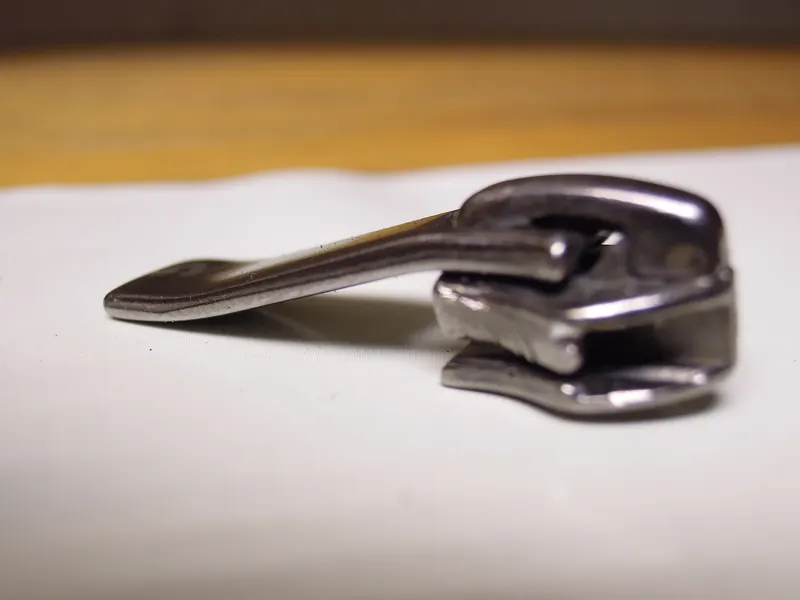
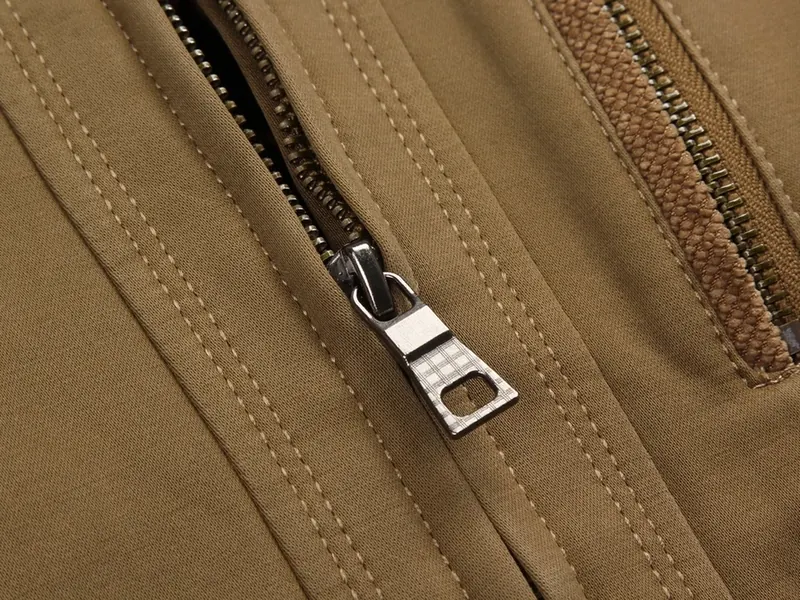
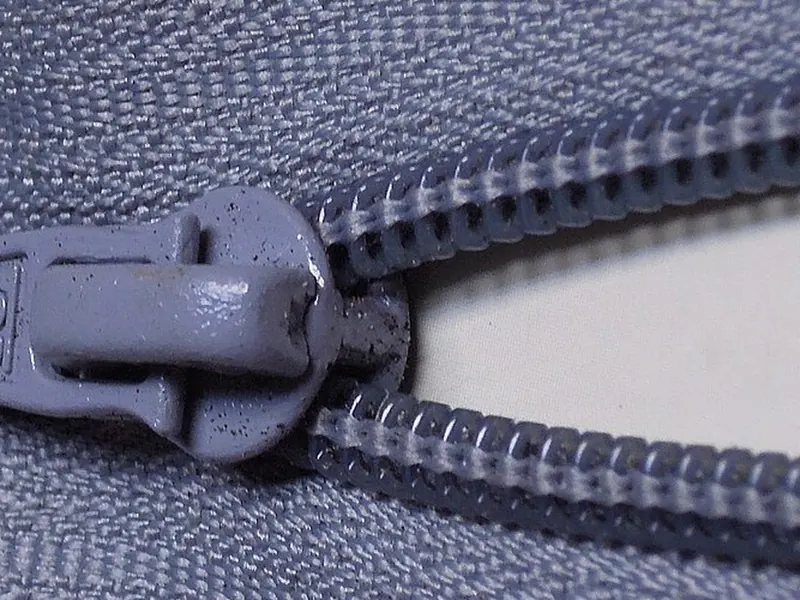
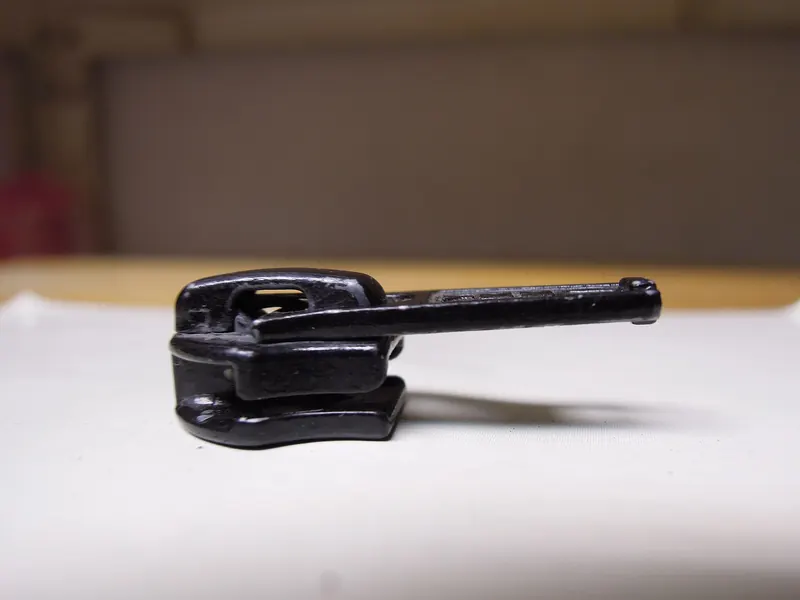
The slider joins and separates the teeth on the two sides. How smoothly a zipper runs, and whether it stays closed, depends largely on the slider.
Slider types by locking method
| Type | How it works | Typical use |
|---|---|---|
| Auto-lock | Locks when the puller is released | Skirts, dresses, outerwear |
| Semi-lock | Locks when the puller lies flat | Jeans, trousers |
| Non-lock | Slides freely | Bags, luggage, upholstery |
| Pin-lock | A pin on the puller presses the teeth | Less common |
| Reversible | Puller turns to either face | Tents, sleeping bags |
| Double-pull | A puller on each face | Two-sided products |
Which slider for which product?
As a general rule, use auto-lock or semi-lock where a zipper is under tension and must not slide down, and non-lock on bags and luggage opened often. Semi-lock is common on jeans.
Slider materials
- Zinc alloy (zamak): Most sliders are die-cast from it and then plated.
- Brass: Good corrosion and wear resistance, preferred for heavy washes.
- Plastic: Light and corrosion-resistant.
Protecting the lock
Forcing the lock can damage the mechanism, especially on small sizes. Lift the puller before moving the slider.
See our slider compatibility guide for what to check when buying. MAK Zipper sells all slider and puller types in metal and plastic.
Auto-lock vs semi-lock
Both help stop a zipper sliding down. An auto-lock slider locks as soon as the puller is released. A semi-lock slider locks when the puller lies flat and opens when it is lifted. Sources often cite semi-lock for jeans and trousers, and auto-lock for skirts, dresses and outerwear.
When do you need a reversible or double-pull slider?
A reversible slider's puller turns to either face, so the zipper works from both sides. A double-pull slider has a puller on each face. They suit products opened from inside and outside, such as tents and sleeping bags, and can come with or without a lock.
Die-cast or pressed?
Slider bodies are made in different ways. Zinc alloy bodies are usually die-cast and then finished with nickel, oxide or paint. Brass bodies can be pressed. According to manufacturer sources, brass resists corrosion and wear better than zinc alloy, so it stands out in heavy processes such as stone and enzyme washing. Zinc alloy can be affected by strong chemicals.
How to choose a slider
- Chain type and size: Both must match.
- Lock need: Will the zipper be under tension or moved often?
- Washing and environment: Heavy washes or salt water?
- Look: Do the finish and puller suit the product?
If you need to replace a slider
If the teeth are sound but the zipper will not close, the slider is often the problem. The new one must match the size and chain type. There is no general cross-brand compatibility table, so buy from the same supplier where possible.
Frequently asked questions
What is a zipper slider?
It is the moving part that joins and separates the teeth on the two sides of a zipper.
How do you open an auto-lock slider?
Lift the puller to open it; it locks when released. Forcing the lock without lifting the puller can damage the mechanism.
Where are non-lock sliders used?
On bags, luggage and upholstery that are opened often and do not need a lock.
Which slider do jeans use?
Semi-lock sliders are common.
What are most sliders made of?
Most are die-cast zinc alloy (zamak). Brass and plastic bodies also exist.